
Imagine if you were still a student; wouldn’t it be much easier to comprehend Ancient Egypt if you were immersed in an environment that replicated the interiors of pyramids and temples? Or to understand the geography of the Amazon if you could simulate a boat ride on the Rio Negro? We live in a time when technology is increasingly advanced and accessible, and now these experiences are possible in the classroom.
Virtual Reality (VR) is a technology that creates an immersive digital environment, entirely separate from the real world, providing a complete sensory experience to the user through devices like VR goggles. In contrast, Augmented Reality (AR) combines virtual elements with the real world, overlaying digital information onto the physical environment through devices such as smartphones or specific glasses.
While VR creates a fully immersive environment, AR enhances the real world with virtual elements. VR tends to be more isolated, requiring specific devices, while AR is more accessible through smartphones and tablets.
Virtual Reality:
- Educational Simulations: Allows students to participate in practical and simulated experiences in virtual environments, such as scientific experiments or hands-on history activities.
- Virtual Travel: Facilitates virtual journeys to historical, geographical, or cultural locations, broadening students’ perspectives without leaving the classroom.
Augmented Reality:
- Interactive Books: Transforms textbooks into interactive experiences, providing additional information, videos, and animations on the content.
- Visual Experiments: Enables the three-dimensional visualization of models and structures, facilitating the understanding of complex concepts, such as molecules or anatomy.
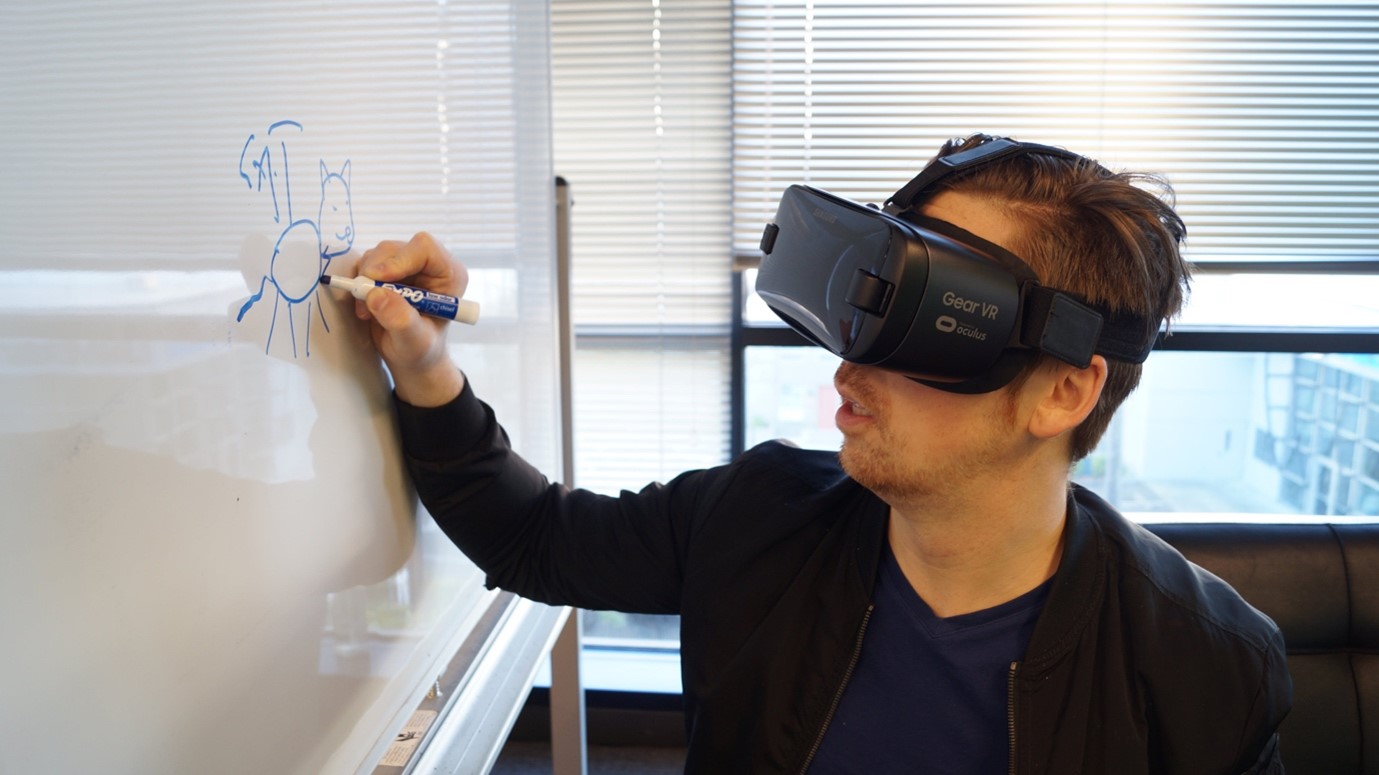
EdTechs play a crucial role in integrating Virtual Reality (VR) and Augmented Reality (AR) into their products and services, offering innovative solutions to enhance the learning experience. Some examples of AR and VR applications include:
Human Anatomy Atlas 2023: Offers 3D models and simulations of the human anatomy, both male and female. The app aims to help students and healthcare professionals understand how the human body functions, allowing users to perform virtual dissections, view animations, and explore muscle function, among other things.
Google Arts and Culture Expeditions: Brings together over 2,000 cultural institutions from 80 countries. Through the platform, users can discover various stories, such as suffragists, performing arts, images from the NASA archive, etc. The app features various augmented reality elements, videos, and 3D images, allowing for greater immersion and interactivity with the user. Users can take virtual reality tours, visit museums worldwide, use Street View, and gain more knowledge about history and the arts.
Star Walk: Find Stars & Planets: Users of this AR app can see and identify constellations and stars in real-time and learn about interesting astronomical facts and daily statistics. With Star Walk, users can visualize and identify constellations and stars in real-time and learn more about astronomy. The app features interesting resources like a sky map with thousands of stars and constellations, real-time tracking of celestial bodies, augmented reality sky view, and an extensive list of astronomy information.
In the context of VR, EdTechs can develop platforms that offer immersive educational simulations, allowing students to explore complex concepts in a practical and engaging manner. This can include virtual laboratories, museum visits, and practical experiences in various subjects. Additionally, AR can be incorporated into educational apps and platforms, transforming textbooks into interactive experiences, providing additional visual information, and facilitating the understanding of concepts through visual elements overlaid on the real world.

It’s important to note that the use of this technology requires an investment in devices by schools or students, and this can impact the adoption of these technologies.
Virtual Reality and Augmented Reality offer vast possibilities to transform the educational landscape, providing innovative learning experiences. However, it is crucial to address associated challenges, such as cost, content development, and curricular integration, to ensure that these technologies reach their full potential in promoting a more engaging and effective education.